Maintaining Luxury Outdoor Furniture: A 2026 Care Guide
Table of Contents
- Why Maintaining Luxury Outdoor Furniture Pays Off
- Your Monthly and Seasonal Cleaning Routine
- Material-Specific Care: Teak, Metal, Wicker, and Fabric
- Choosing the Best Outdoor Furniture Covers
- Outdoor Cushion Maintenance Tips for Lasting Comfort
- Seasonal Patio Furniture Storage Done Right
- Common Mistakes That Shorten Furniture Life
- Conclusion
- Frequently Asked Questions
Last Updated: September 18, 2026
Why Maintaining Luxury Outdoor Furniture Pays Off
Maintaining luxury outdoor furniture means protecting, cleaning, and storing high-quality pieces so they keep their finish, structure, and comfort through years of outdoor exposure. At The Lavish Sunset, we think of it as an ongoing relationship rather than a chore. Small habits protect an investment far better than occasional deep cleans.

Replacement costs far more than care. A faded finish, a rusted joint, or a mildewed cushion usually signals months of small neglect, not one dramatic event. Once oxidation or mildew takes hold, restoring the original look becomes a repair project.
The Real Cost of Neglect
The biggest mistake with luxury outdoor furniture is treating it like indoor furniture that happens to live outside. Sun, rain, humidity, and temperature swings work on every material continuously. UV exposure dulls fabric and dries wood, standing water corrodes hardware and feeds mildew, and debris traps moisture.
Left alone, these problems compound. A loose bolt becomes a wobbly frame, and a small tear in a cushion cover becomes a soaked insert. Preventative care costs a few hours each season; restoration costs you a season of enjoyment.
Your Monthly and Seasonal Cleaning Routine
A workable routine combines a quick monthly inspection with a deeper seasonal cleaning. Monthly, remove debris, check hardware, and spot-clean spills. Seasonally, wash surfaces, treat wood, and condition fabric.
What You Will Need
- A soft-bristle brush and a microfiber cloth
- A bucket of warm water with mild detergent
- A garden hose with a gentle spray setting
- Teak oil for untreated hardwood
- A soft brush for wicker crevices and a dry cloth for metal
Step-by-Step Cleaning
- Remove cushions, pillows, and any decorative items.
- Brush away loose debris from frames and crevices.
- Wash surfaces with warm water and mild detergent using a soft cloth.
- Rinse with a gentle spray and let pieces air-dry fully.
- Inspect hardware, tighten bolts, and note any chips or scratches.
- Apply teak oil to untreated wood once it is completely dry.

Avoid harsh chemicals and abrasive pads, which strip finishes and leave surfaces vulnerable. When in doubt, plain soap and water is the safer choice.
Material-Specific Care: Teak, Metal, Wicker, and Fabric
Different materials fail in different ways, so each needs its own approach.
Teak and Untreated Hardwood
Teak earns its reputation outdoors because of its natural oils, which slow moisture absorption and help the wood resist rot. Left alone, those oils weather away and the surface turns the soft silver-gray many designers prefer. That gray is not damage; it is the wood's natural patina.
Oiling is a choice, not a requirement. To keep the warm honey tone, clean the surface and apply a thin coat of teak oil once or twice a year, always on bone-dry wood; oiling damp wood traps moisture and can cause blotching. If you prefer the silver look, skip the oil and simply clean.
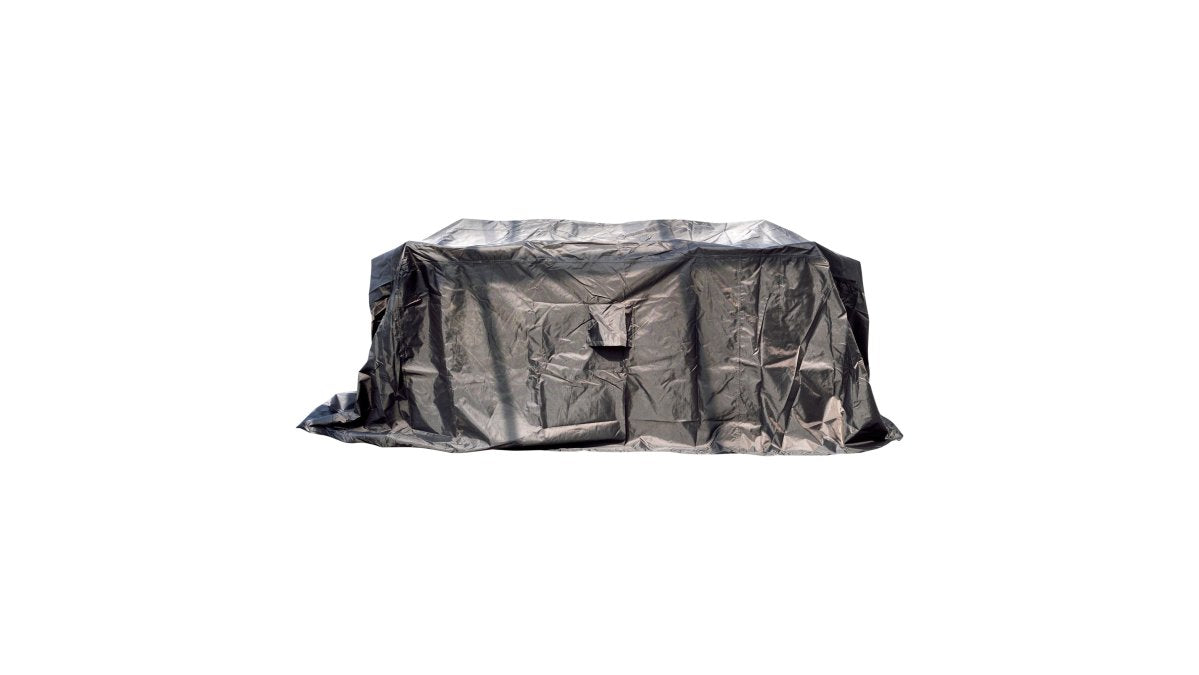
Amazonia Patio Cover for Dining Set →
Powder-Coated Metal
Powder coating is a cured polymer shell, not paint. It is tough but not invincible. The failure to watch for is a chip or scratch that exposes bare metal; once moisture and oxygen reach it, corrosion begins at that pinpoint and creeps outward under the coating.
Wicker, Rattan, and Woven Pieces
Woven furniture collects dust and pollen deep in its crevices, and that trapped debris holds moisture against the weave. Use a soft brush to lift debris out, then follow with a dry or barely damp cloth. Soaking a woven piece is the most common mistake, since water that seeps into the weave can sit for days and encourage mildew inside.
All-Weather Fabric and Textiles
Outdoor fabrics resist fading and moisture, but they still benefit from airflow. Brush off debris, spot-clean with mild soap and water, and let cushions dry fully on both sides. Rotate cushions periodically so fading stays even across the set.
Why This Matters for Your Warranty
High-end outdoor furniture warranties typically cover manufacturing defects, not the results of care choices. A finish ruined by an abrasive product, a frame that corrodes because chips were never touched up, or a cushion that mildews because it was stored damp are usually classified as owner-caused. That distinction can decide whether a claim is honored.
| Material | Main Risk | Care Approach | Frequency |
|---|---|---|---|
| Teak and hardwood | Drying, cracking, graying | Mild soap wash, optional teak oil on dry wood | Seasonal |
| Powder-coated metal | Chips, corrosion, rust | Spot-clean, touch up chips promptly | Monthly |
| Wicker and woven | Dust in crevices, mildew | Soft brush, dry cloth, never soak | Monthly |
| All-weather fabric | Mildew, fading | Brush clean, air-dry fully, rotate | Seasonal |
Choosing the Best Outdoor Furniture Covers
The best outdoor furniture covers are breathable, well-fitted, and UV-resistant, because trapped moisture does more damage than rain. Look for built-in vents, an adjustable draw-cord for wind, and a size that fits without sagging or stretching.
Outdoor Cushion Maintenance Tips for Lasting Comfort
Outdoor cushion maintenance tips start with one rule: dry beats clean. Mildew grows in damp, shaded cushions long before it shows on the surface. Shake cushions after rain, stand them on edge to dry, and bring them inside during wet spells.
Seasonal Patio Furniture Storage Done Right
Seasonal patio furniture storage protects your pieces during the months you use them least. Clean everything first, since dirt left on a surface for months can stain or bond to the finish. Let every piece dry completely, then cover or store it so air can move.
- Clean and dry all frames, cushions, and textiles before storage
- Remove cushions and store them indoors where possible
- Loosen or remove covers so air circulates around frames
- Store smaller items off the ground to avoid standing water
- Check stored pieces once or twice during the off-season
Climate-Specific Protocols
Where you live shapes what your furniture needs most, and adjusting for your climate is the highest-value habit you can build.
Eco-Conscious Cleaning for the Off-Season
Before storage is also the best time for a thorough clean, and a good moment to choose gentler products. Mild castile soap, diluted white vinegar, and a simple baking soda paste handle most routine cleaning without harsh solvents, and they are kinder to finishes, plants, and the air around your home.
Amazonia Patio Cover for Dining Set →
Storage Solutions
Storage options range from breathable covers to dedicated indoor space. Whichever you choose, the goal is the same: dry, ventilated, and protected from direct sun. If you are refreshing your setup for the season ahead, our outdoor furniture collection includes pieces designed to weather the off-season gracefully, and our luxury concierge can help you plan storage and care around your climate.
National Weather Service seasonal outlook and climate data
Common Mistakes That Shorten Furniture Life
Most shortened furniture life traces back to a handful of avoidable habits. Skipping hardware inspection lets a loose bolt become a structural problem. Standing water accelerates corrosion. The wrong cleaner strips protective finishes. Ignoring small chips in powder-coated metal opens the door to rust.
| Mistake | Fix | Impact |
|---|---|---|
| Skipping hardware checks | Tighten bolts monthly | Preserves structural integrity |
| Standing water | Improve drainage, dry after rain | Prevents corrosion and rust |
| Harsh cleaners | Use mild detergent | Protects finishes |
| Untreated chips | Touch up promptly | Stops rust at the source |
| Damp storage | Dry fully before covering | Prevents mildew |
Conclusion
Maintaining luxury outdoor furniture comes down to consistency, not effort. A monthly check, a seasonal clean, and the right storage habits keep your outdoor living space ready for gatherings, quiet mornings, and everything in between. When you are ready to refresh or expand your space, explore our premium outdoor furniture collection, or contact our luxury concierge for personalized guidance tailored to your home and climate.
Frequently Asked Questions
How do you clean high-end outdoor furniture without damaging it?
Start by removing loose debris with a soft brush. Mix a few drops of mild detergent in warm water and wipe surfaces with a microfiber cloth, rinsing well. Avoid abrasive scrubbers and harsh chemicals. For teak, always scrub along the grain. Rinse and dry completely, especially metal joints, to prevent corrosion and water spots. This gentle approach preserves finishes and keeps luxury outdoor furniture looking its best.
What is the best way to protect luxury patio furniture during winter?
Clean and dry each piece thoroughly before cold weather arrives. Apply teak oil to teak, touch up any chips on powder-coated metal, and store cushions indoors. Use a waterproof cover with mesh vents, like the Amazonia Patio Cover for Dining Set, to block snow and UV rays while letting air circulate. Elevate legs off wet surfaces and check monthly for trapped moisture.
How often should you treat teak or metal outdoor furniture?
Teak typically benefits from oiling once or twice a year, depending on climate and how much color change you prefer. Powder-coated metal rarely needs treatment beyond an annual inspection and touch-up of scratches. In coastal or humid areas, check both materials every few months for surface oxidation or mildew. Regular, light care beats occasional heavy restoration for maintaining luxury outdoor furniture.
Can you use pressure washers on luxury outdoor furniture?
It is best to avoid pressure washers on luxury pieces. High-pressure water can erode finishes, force moisture into joints, and fray fabric. Instead, use a garden hose with low pressure, a soft brush, and mild detergent. For stubborn grime, spot-treat and rinse gently. This protects structural integrity and keeps warranties intact.