Best Weather Resistant Outdoor Furniture: 2026 Guide
Table of Contents
- How to Choose the Best Weather Resistant Outdoor Furniture
-
Top Weather Resistant Outdoor Furniture Picks
- 1. POLYWOOD Adirondack Chairs: Recycled HDPE Built to Last
- 2. Kingsley Bate Teak Furniture: Natural Durability and Timeless Style
- 3. Frontgate Outdoor Furniture: Luxury Cushion Durability
- 4. Outer Outdoor Furniture: Modular Design with Built-In Protection
- 5. Highwood Poly Lumber Furniture: All-Season American-Made
- 6. Lloyd Flanders: Classic Woven Elegance on Aluminum Frames
- Best Outdoor Furniture Materials for Coastal Climates
- Outdoor Furniture Covers vs Weather Resistant Materials: What Works Best
- How to Maintain Outdoor Furniture in Winter
- Which Weather Resistant Outdoor Furniture Is Right for You?
- Frequently Asked Questions
Last Updated: August 29, 2026
How to Choose the Best Weather Resistant Outdoor Furniture
Choosing the wrong outdoor furniture is an expensive mistake. At The Lavish Sunset, we've helped design-focused homeowners transform their backyards into refined retreats, and a common regret we hear is buying furniture that looked beautiful in a showroom but fell apart after a couple of seasons.
Weather resistant outdoor furniture is engineered to withstand moisture, UV exposure, temperature swings, and environmental stress without losing structural integrity or aesthetic appeal. The right choice depends on your climate, maintenance tolerance, and expected lifespan.
Quick Picks:
- Best Overall for Low Maintenance: POLYWOOD Adirondack Chairs, recycled HDPE that never rots
- Best Natural Material: Kingsley Bate Teak, plantation-grown wood that ages beautifully
- Best for Coastal Climates: Highwood Poly Lumber, no salt-air corrosion
- Best Cushion System: Frontgate Outdoor Furniture, solution-dyed acrylic with 10-year frame warranty
- Most Innovative Design: Outer Outdoor Furniture, built-in cushion protection
Key Factors: Climate, Material, and Structural Integrity
Match material to your climate profile. A powder-coated aluminum set thrives in dry climates but corrodes faster on a coastal shore.
- Hot, dry climates: UV-stabilized materials like resin, HDPE, and powder-coated aluminum resist finish degradation.
- Humid, rainy climates: Teak, poly lumber, and all-weather wicker on aluminum frames resist rot and mildew.
- Coastal environments: Stainless steel hardware, HDPE, and powder-coated aluminum with marine-grade finishes are essential against salt-air corrosion.
- Cold, snowy climates: Poly lumber, teak, and aluminum handle freeze-thaw cycles without cracking.
Always check hardware quality, quality pieces use stainless steel throughout, not zinc-plated screws that rust in a single wet season.
Wind-Resistance Ratings and Why They Matter
Wind resistance is the specification most buyers never check until a chair ends up in their neighbor's yard. Lightweight resin and wicker pieces are particularly vulnerable in coastal or elevated areas.
According to ASTM International's outdoor furniture standards, manufacturers can test furniture against specific load and stability benchmarks. When evaluating pieces, prioritize weight (heavier poly lumber and teak stay put), low center of gravity, stackability for quick storage, and anchor compatibility for dining tables.
Top Weather Resistant Outdoor Furniture Picks
The six picks below represent the best weather resistant outdoor furniture available across different material categories, use cases, and climate profiles.
1. POLYWOOD Adirondack Chairs: Recycled HDPE Built to Last
POLYWOOD is the benchmark for low-maintenance outdoor seating. Every piece is made from recycled HDPE, which cannot rot, splinter, crack, or absorb moisture. ColorStay UV inhibitors are built into the material itself, so color won't fade or peel. The 20-year residential warranty is the most telling detail, most brands offer 1-3 years.
Best for: Homeowners in any climate who want zero-maintenance seating that outlasts everything else.
What works: Exceptional weather resistance across all climates. Genuinely maintenance-free. Sustainable, eco-friendly material made from post-consumer recycled plastics.
What doesn't: POLYWOOD chairs are heavy and carry a higher price point than basic plastic alternatives, though the lifetime cost calculation strongly favors them.
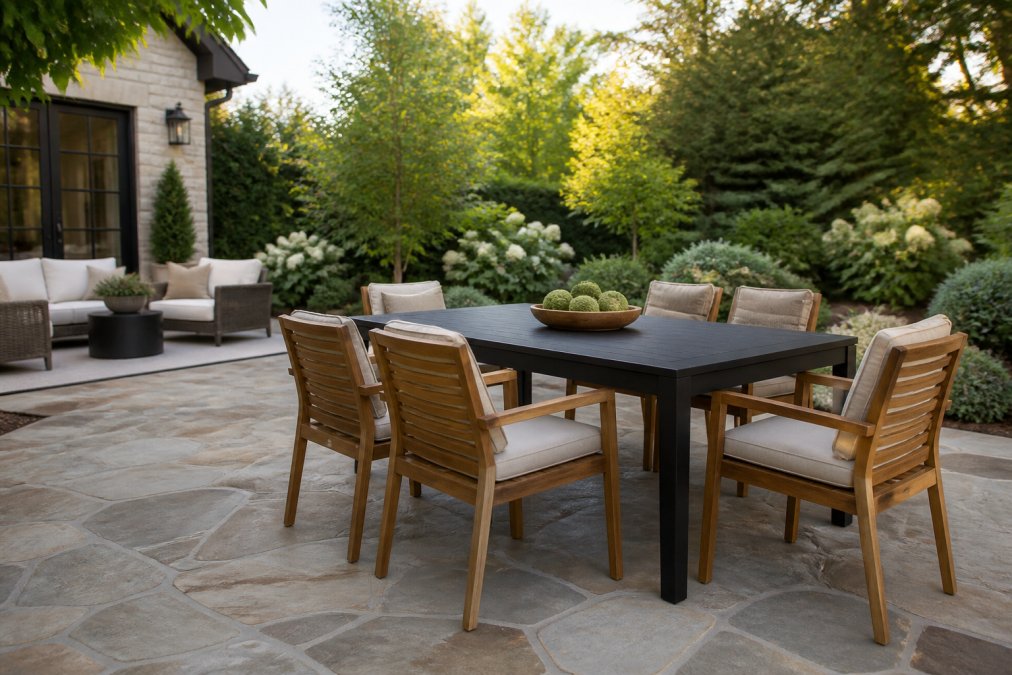
2. Kingsley Bate Teak Furniture: Natural Durability and Timeless Style
Teak wood has natural oil content that resists water, decay, and insects without chemical treatment. Kingsley Bate sources plantation-grown teak built to last a lifetime. Left untreated, teak develops a silver-gray patina. Periodic teak oil application maintains the original honey-gold color.
Best for: Homeowners who want timeless aesthetics and natural durability, and don't mind occasional maintenance to preserve the original finish.
What works: Exceptional natural weather resistance. Sustainably sourced from FSC-certified forests. Pieces that age beautifully rather than degrade.
What doesn't: Teak is among the most expensive materials in outdoor furniture. Maintaining the original color requires a cleaning and oiling schedule every one to two seasons.
3. Frontgate Outdoor Furniture: Luxury Cushion Durability
Frontgate treats cushions as a core engineering challenge. Their cushions use 100% solution-dyed acrylic fibers, where color is baked into the fiber itself rather than applied to the surface (peer-reviewed research). This delivers fade resistance that holds up after long hours in direct sun. Frames are backed by a 10-year structural warranty, industry-leading for this price tier.
Best for: Homeowners who prioritize cushion comfort and fabric longevity alongside frame durability.
What works: Superior cushion system. Extensive fabric customization options. Elegant designs that work across traditional and contemporary spaces.
What doesn't: This is a premium investment. Even solution-dyed acrylic benefits from storage or covers during extended off-season periods.
4. Outer Outdoor Furniture: Modular Design with Built-In Protection
Outer solves the problem every outdoor furniture owner knows: what do you do with cushions when it rains? Their OuterShell is a built-in cover system that zips directly over the cushion without removing it from the frame. The modular design lets homeowners reconfigure their outdoor space without buying new pieces. Frames are available in aluminum, teak, or all-weather wicker. The 10-year limited warranty reflects genuine confidence in construction.
Best for: Homeowners who want innovative weather protection built into the furniture itself, combined with a modern modular aesthetic.
What works: The OuterShell system solves a real daily frustration. Comfortable, multi-layer foam cushions. Sustainable materials throughout.
What doesn't: The return policy includes a 20% restocking fee plus shipping costs. The price point is firmly premium.
5. Highwood Poly Lumber Furniture: All-Season American-Made
Highwood builds with high-grade poly lumber, engineered specifically for furniture with a wood-grain texture. Every piece is made in the USA and is resistant to fading, splintering, and cracking across all seasons. Freeze-thaw cycles, salt air, humidity, and UV exposure all leave poly lumber unaffected.
Best for: Homeowners in harsh climates, especially snowy winters or coastal environments, who want American-made furniture with a traditional aesthetic and zero maintenance.
What works: Excellent weather resistance in all conditions. Eco-friendly material. Wide range of styles. Made in the USA.
What doesn't: Some collections have limited color options. Poly lumber costs more than basic plastic but significantly less than teak at comparable durability.
6. Lloyd Flanders: Classic Woven Elegance on Aluminum Frames
Lloyd Flanders uses woven vinyl strands over solid aluminum frames, producing a texture that reads as traditional wicker while delivering the weather resistance of synthetic materials. The aluminum frame won't rust, and the woven vinyl won't rot or mildew. Teak pieces are sourced from FSC-certified forests.
Best for: Homeowners who prioritize classic elegance and unique woven aesthetics.
What works: Innovative, durable woven materials. Corrosion-resistant aluminum frames. Sustainably sourced teak options. Customizable fabric options.
What doesn't: Woven pieces require specific care; high-pressure washing can damage the weave. The price reflects the craftsmanship involved.
Best Outdoor Furniture Materials for Coastal Climates
Coastal climates are the most demanding environment for outdoor furniture. Salt-air corrosion, high humidity, UV intensity, and wind combine to destroy materials that perform perfectly well inland.
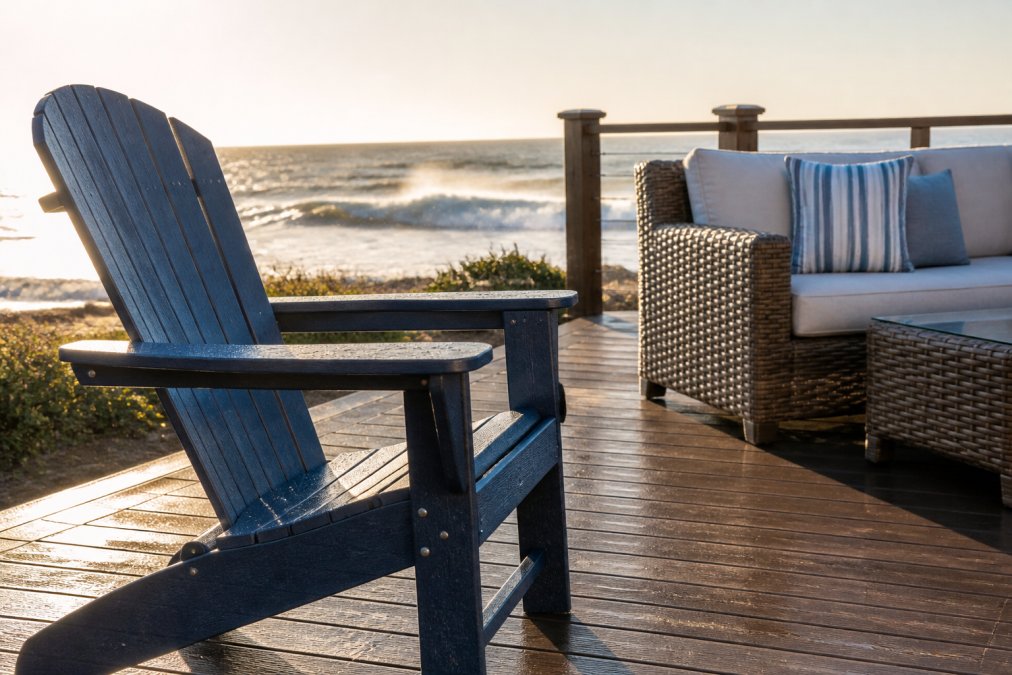
The best materials for coastal climates are HDPE poly lumber, powder-coated aluminum with marine-grade finishes, teak wood, and synthetic rattan on aluminum frames.
Salt-Air Corrosion: What Survives and What Doesn't
Salt air accelerates finish degradation on almost every metal. Standard aluminum corrodes. Wrought iron rusts aggressively within a single season.
Materials that survive coastal environments:
- HDPE and poly lumber: Zero corrosion risk. Salt air has no effect on recycled plastic.
- Powder-coated aluminum: Marine-grade powder coating creates a barrier against salt-air oxidation. Verify the coating is applied electrostatically and baked.
- Teak wood: Natural oil content resists moisture and salt penetration. Teak is one of the few woods rated for marine environments.
- All-weather wicker on aluminum frames: The synthetic rattan is salt-resistant; ensure the frame is aluminum, not steel.
Materials that don't survive:
- Untreated steel or wrought iron
- Standard galvanized hardware (use stainless steel only)
- Untreated softwoods like pine or cedar
- Cheap resin furniture with hollow construction
Environmental Impact of Material Choices
Recycled HDPE and poly lumber divert post-consumer plastic waste from landfills. Teak sourced from FSC-certified plantations represents responsible forestry. According to the Forest Stewardship Council's certification standards, FSC-certified teak guarantees wood comes from responsibly managed forests with verified chain-of-custody documentation. Powder-coated aluminum is highly recyclable at end of life.
Outdoor Furniture Covers vs Weather Resistant Materials: What Works Best
Weather resistant materials are the foundation. A piece built from HDPE, teak, or powder-coated aluminum will withstand rain, UV, and temperature changes without covers.
Outdoor furniture covers extend the life of any furniture during extended off-season storage or severe weather events. They're particularly valuable for protecting cushions, the most vulnerable component of any outdoor set.
Invest in weather resistant materials first, then add covers as a secondary layer of protection for cushions and during off-season storage. Covers are not a substitute for durable materials.
| Protection Type | Best For | Limitation |
|---|---|---|
| Weather resistant HDPE/poly lumber | Year-round all-climate use | Higher upfront cost |
| Powder-coated aluminum | Lightweight, coastal-safe frames | Cushions still need protection |
| Teak wood | Natural durability, aesthetic aging | Needs oil to maintain original color |
| All-weather wicker | Classic look, mildew-resistant | Frame material determines durability |
| Outdoor furniture covers | Cushion protection, off-season storage | Not a substitute for durable materials |
How to Maintain Outdoor Furniture in Winter
Proper winter maintenance separates furniture that lasts two decades from furniture needing replacement after five years. The approach varies by material, but the core principle is consistent: reduce exposure to freeze-thaw moisture cycles and UV degradation during months when furniture isn't in use.
By material:
- HDPE and poly lumber: These materials require no winter preparation. They can stay outside year-round. Soap and water cleaning is sufficient.
- Teak: Clean with a teak cleaner and apply teak oil before winter storage if you want to maintain the original color.
- Powder-coated aluminum: Wipe down frames and check for chips in the powder coating before winter. Touch up chips with matching powder coat paint to prevent corrosion underneath.
- All-weather wicker: Clean thoroughly before winter. Moisture trapped in the weave during freezing temperatures can damage the structure over multiple freeze-thaw cycles.
- Cushions: Store indoors or in a weatherproof storage box for winter regardless of fabric type.
Storage Logistics for Small Spaces
Most storage guides assume homeowners have a garage or large shed. For small-space storage, prioritize stackable designs. Many poly lumber and aluminum chairs stack to 4-6 high, reducing a full patio set to a single compact column. Weatherproof deck boxes serve double duty as storage and seating while holding an entire season's worth of cushions.
Repair and Restoration: Bringing Weathered Pieces Back to Life
Most "weathered" outdoor furniture is more salvageable than it looks. Teak that has silvered can be restored to its original honey color with a teak cleaner and brightener, followed by teak oil application. Small chips in powder-coated aluminum can be touched up with powder coat aerosol sprays. Individual broken strands in woven vinyl can be rewoven using replacement vinyl stranding. Cushion cores can be replaced independently of the cover.
Which Weather Resistant Outdoor Furniture Is Right for You?
The right choice depends on three variables: your climate, your maintenance tolerance, and your aesthetic priorities.
Choose HDPE or poly lumber (POLYWOOD, Highwood) if you want genuinely maintenance-free furniture that performs in any climate, including coastal environments and snowy winters.
Choose teak (Kingsley Bate) if you want natural materials that age beautifully and are willing to do occasional maintenance.
Choose powder-coated aluminum with solution-dyed acrylic cushions (Frontgate) if cushion durability and fabric customization are priorities.
Choose Outer if the cushion-management problem is your biggest frustration and you want a modern modular aesthetic.
Choose Lloyd Flanders if classic woven aesthetics are non-negotiable and you want the durability of synthetic materials in a traditional visual form.
| Brand | Material | Best Climate | Maintenance Level | Warranty |
|---|---|---|---|---|
| POLYWOOD | Recycled HDPE | All climates | Minimal | 20-year residential |
| Kingsley Bate | Plantation teak | Humid, coastal | Low-moderate | Contact for details |
| Frontgate | Teak/aluminum/wicker | All climates | Low | 10-year frame |
| Outer | Aluminum/teak/wicker | All climates | Low | 10-year limited |
| Highwood | Poly lumber | All climates | Minimal | Varies by product |
| Lloyd Flanders | Woven vinyl/aluminum | All climates | Low-moderate | Varies by product |
The Lavish Sunset curates a collection of premium outdoor furniture built around this kind of decision-making: matching material quality and climate performance to each homeowner's specific environment and aesthetic. Every piece is selected for craftsmanship, longevity, and timeless design that holds its value season after season.
Selecting the right weather resistant outdoor furniture is a long-term investment decision. The Lavish Sunset offers a carefully curated collection of premium outdoor furniture distinguished by superior craftsmanship and timeless design, with reliable delivery across the United States. Whether you're building a coastal retreat or a year-round entertaining space, our collection is selected to deliver lasting value. Add to cart and start building the outdoor living space you've been planning.
Frequently Asked Questions
Q: What is the most weather resistant outdoor furniture material?
A: HDPE poly lumber and powder-coated aluminum consistently top the list for all-around weather resistance. Poly lumber resists fading, cracking, and moisture without any sealing or staining. Powder-coated aluminum is corrosion-resistant and lightweight. For coastal environments specifically, both outperform wrought iron and untreated wood. Teak wood is also exceptionally durable thanks to its natural oils, though it requires occasional cleaning to prevent mildew if you want to maintain its original color.
Q: What kind of outdoor furniture can be left outside all year long?
A: Furniture made from HDPE poly lumber, powder-coated aluminum, or sustainably sourced teak wood handles year-round outdoor exposure best. These materials resist UV degradation, moisture, and temperature swings without losing structural integrity. All-weather wicker built on aluminum frames also holds up well through most seasons. For snowy climates, even these durable materials benefit from outdoor furniture covers during extended periods of heavy snow or ice to preserve finish quality and cushion durability long-term.
Q: Does teak wood hold up better than aluminum in harsh weather?
A: Both perform well, but in different conditions. Teak wood's natural oils make it rot-resistant and highly durable in wet, humid, or coastal climates. It develops a silver-gray patina over time if left untreated, which many homeowners find appealing. Powder-coated aluminum, however, is lighter, virtually maintenance-free, and resists salt-air corrosion better in direct oceanfront settings. For snowy winters, aluminum frames with UV-stabilized cushions tend to require less seasonal care than teak, which can benefit from teak oil application after harsh winters.
Q: How do outdoor furniture covers compare to buying weather resistant materials?
A: Weather resistant materials handle daily exposure without intervention, while outdoor furniture covers add a protective layer during extended off-season storage or severe weather events. The strongest approach combines both: choose inherently durable materials like poly lumber or powder-coated aluminum, then use quality covers during winter or hurricane season. Covers alone cannot fully compensate for furniture built from low-quality materials, and they add a maintenance step. For a luxury outdoor living space, treat covers as a supplement to good materials, not a substitute.
Q: How do I maintain outdoor furniture through a harsh winter?
A: Clean all surfaces thoroughly before temperatures drop, removing dirt, pollen, and moisture that accelerate finish degradation. Apply teak oil to any teak pieces if you want to preserve color. Store cushions indoors or in a dry deck box. Cover aluminum and poly lumber frames with fitted, breathable outdoor furniture covers to block ice and debris. For small spaces, stackable chairs and folding tables reduce the storage footprint significantly. Inspect hardware each spring, replacing any corroded stainless steel fasteners before the season begins.