Best Outdoor Furniture for Coastal Climates
Table of Contents
- Why Coastal Climates Are Hard on Patio Furniture
- Salt-Resistant Outdoor Furniture Materials That Last
- How to Maintain Outdoor Furniture in Coastal Areas
- Best Outdoor Furniture for Coastal Climates: Our Top Picks
- Choosing Furniture for High-Wind Areas and Micro-Climates
- Weather-Resistant Finishes, Hardware, and Longevity
- Frequently Asked Questions
Last Updated: September 11, 2026
Why Coastal Climates Are Hard on Patio Furniture
Salt air is the quiet enemy of outdoor furniture (noaa.gov). It settles on every surface, works into joints and seams, and accelerates corrosion on metal hardware long before inland furniture shows wear. Add UV degradation, year-round humidity, and salt spray on coastal breezes, and you have one of the harshest environments furniture can face.
This guide from The Lavish Sunset covers what holds up near the water, how to maintain it, and which pieces we recommend. Coastal climates demand materials and hardware chosen for corrosion resistance, not just general weather resistance.
Salt-Resistant Outdoor Furniture Materials That Last
The best materials for coastal climates share one trait: they resist moisture and salt without relying on a finish that wears away. Four categories perform well near the water.
- Teak and other dense natural woods. Teak's natural oils make it moisture resistant. It weathers to a soft silver-grey if left untreated, or holds a warm honey tone with periodic teak oil.
- Powder-coated aluminum. Lightweight, rust-resistant, and easy to move. The powder coating adds a layer of protection against salt spray.
- HDPE and poly lumber. Synthetic resin lumber that never absorbs water, never splinters, and never needs painting. It is genuinely maintenance-free.
- Marine-grade stainless steel hardware. The detail that decides whether a set lasts five years or fifteen. AISI 316 stainless steel is the coastal standard (assda.asn.au).
Teak and Other Natural Woods
Teak remains the benchmark for coastal wood furniture. Its tight grain and natural oils slow moisture absorption, and it handles sun exposure better than most softwoods. Expect to apply teak oil once or twice a year to preserve the original color.
Powder-Coated Aluminum and HDPE Lumber
Powder-coated aluminum is the practical pick for high-wind areas because it is light enough to reposition and will not rust through. HDPE lumber, also called poly lumber, resists UV degradation, moisture, and salt spray, and never needs refinishing. Both suit deck furniture and casual patio dining sets.
Wicker, Resin, and Wrought Iron Alternatives
Traditional wicker and wrought iron struggle in coastal air. Wrought iron rusts unless heavily coated and maintained, and natural wicker dries out and cracks. Synthetic resin wicker over an aluminum frame solves both problems for homeowners who want the woven look without the corrosion risk.

How to Maintain Outdoor Furniture in Coastal Areas
Routine care separates furniture that lasts a decade from furniture that looks tired in two years. Maintenance in coastal areas is simple, just more frequent than inland.
Routine Cleaning and Teak Oil
Rinse frames and cushions monthly with fresh water to remove salt spray before it dries and bonds (noaa.gov). A mild soap solution handles stubborn grime. For teak, clean with a soft brush, let it dry fully, then apply teak oil once or twice a year to restore moisture resistance and color.
Hardware, Covers, and Storage
Check bolts, screws, and connectors each season, and replace standard steel fasteners with stainless steel hardware. During extended off-seasons, use breathable covers rather than airtight ones so trapped moisture can escape, and store cushions indoors where possible.
| Task | Frequency | Why It Matters |
|---|---|---|
| Freshwater rinse | Monthly and after storms | Removes salt spray before it bonds |
| Teak oil application | 1-2 times per year | Restores moisture resistance and color |
| Hardware inspection | Each season | Catches corrosion before it spreads |
| Cushion cleaning | Monthly | Prevents mildew in humid air |
| Cover or store | Off-season | Protects against wind and salt buildup |
Best Outdoor Furniture for Coastal Climates: Our Top Picks
Every set below is built with coastal conditions in mind, from marine-grade hardware to moisture-resistant cushions, for homeowners who want an outdoor space that holds its beauty near the water.

Lavish Sunset Marina Teak Sets
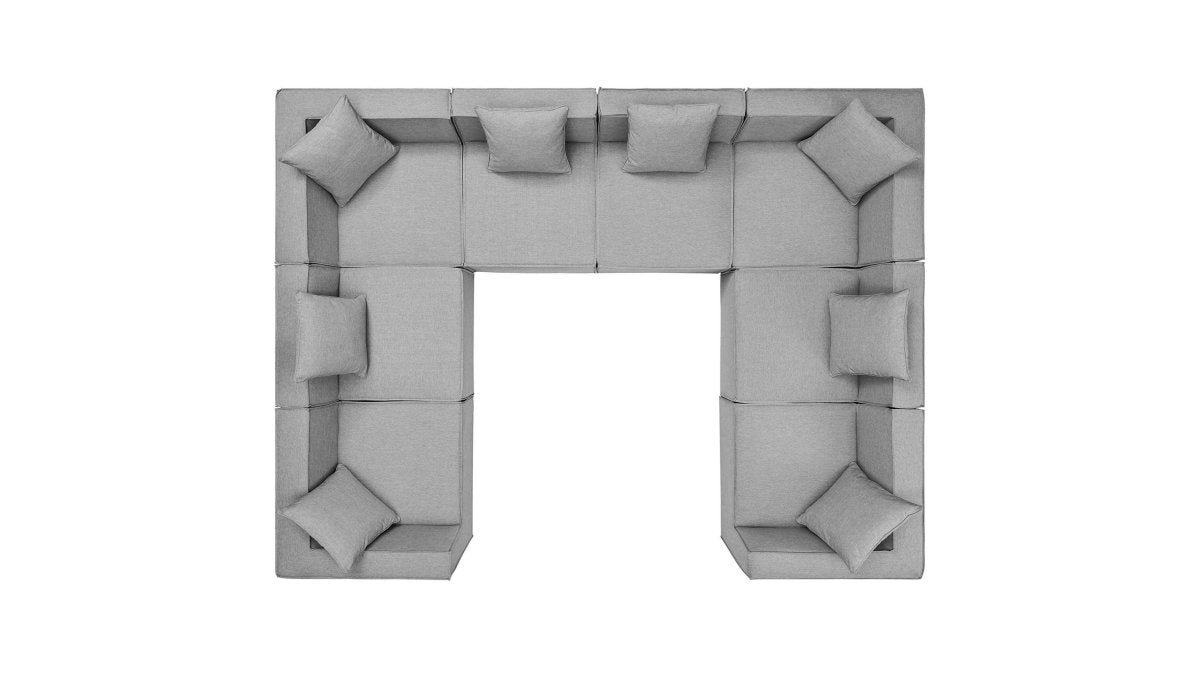
Our top pick is the Lavish Sunset Marina collection, a family of premium-grade teak sets available with navy, grey, or white cushions. The 10-piece Marina set with navy cushions ($5,789) seats a crowd, while the 9-piece lounge set ($4,295) and 8-piece sectional ($4,075) suit smaller spaces. Each set pairs weather-resistant teak with fade-resistant cushions that handle sun and humidity without losing their finish.
For dining, the Julien FSC Certified Teak Extendable Dining Set ($2,746) uses sustainably sourced teak with an extendable table that adapts from weeknight dinners to holiday hosting. It is the most versatile coastal dining option we carry.
Panther Wicker and FSC Wood Seating Set
The Panther Outdoor Patio Wicker and FSC Wood Seating Set ($3,060) pairs handcrafted synthetic wicker with FSC Certified Eucalyptus wood and removable waterproof polyester cushions. It suits homeowners who want the woven look without natural wicker's fragility, and the removable cushions make end-of-season cleaning easy.
Coastal Comfort with Marine-Grade Heating
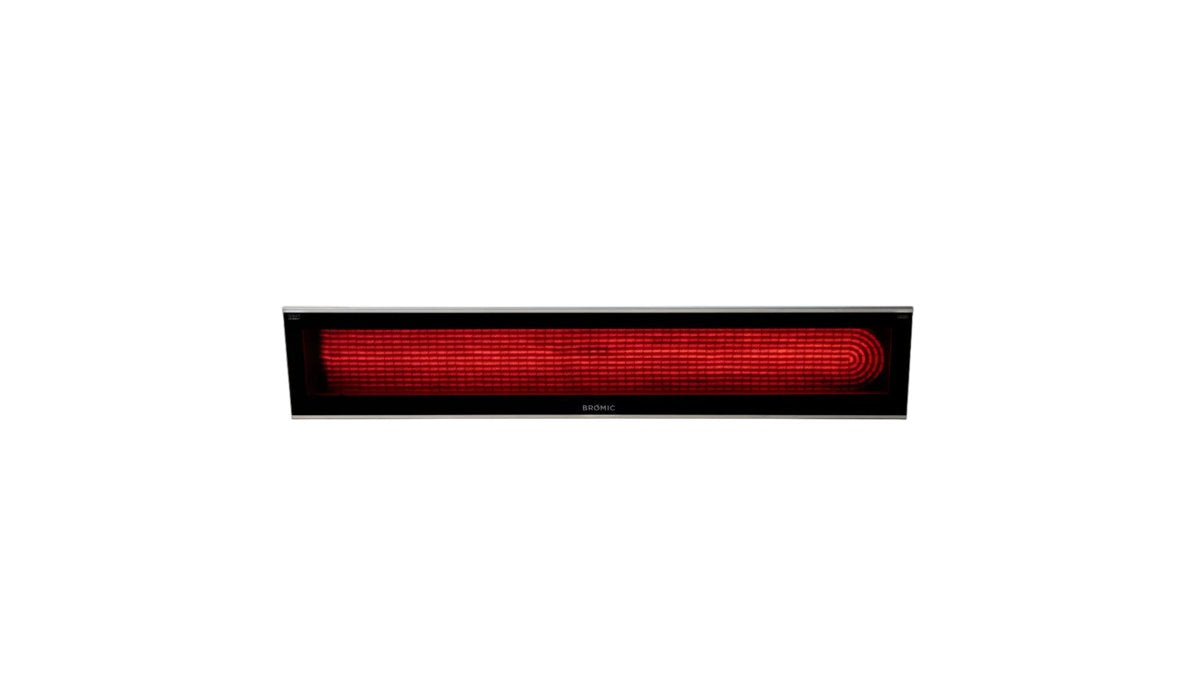
Cool coastal evenings extend your outdoor season, but they also call for warmth. The Bromic Platinum Smart-Heat Electric Marine heater ($3,645) is built for salt air, using AISI 316 marine-grade stainless steel, a fully enclosed body, and an IPX5 rating to resist corrosion. It comes in 2300W, 3400W, and 4500W models, with coverage up to 143 square feet. For a freestanding option, the Bromic Eclipse Smart-Heat Freestanding heater ($5,149) combines infrared heating with a dimmable LED light.

Choosing Furniture for High-Wind Areas and Micro-Climates
"Coastal" is not one climate. A home on the water and a home two miles inland both sit near the coast, but they expose furniture to very different conditions. Matching your choices to your micro-climate is the difference between a set that thrives and one you are constantly repairing.
Two Coastal Zones, Two Sets of Priorities
Salt spray zone (oceanfront and direct waterfront). Here, airborne salt is constant. It lands on every surface, settles into joints, and accelerates corrosion on any metal that is not marine-grade. Priorities:
- Frames in powder-coated or anodized aluminum, or dense teak.
- AISI 316 stainless steel hardware throughout, not just on visible bolts.
- Cushions with solution-dyed, fade-resistant fabric and quick-drying foam.
- A freshwater rinse routine after storms and heavy onshore winds.
Humid inland coastal zone (a few blocks to a few miles from the water). Salt spray is lighter or occasional, but humidity stays high and mildew pressure is real. Priorities:
- HDPE poly lumber, which never absorbs water and resists mildew.
- Synthetic resin wicker over aluminum, which avoids the cracking that natural wicker suffers in humid air.
- Breathable covers and removable, washable cushion covers.
- Attention to airflow around cushions and under furniture to prevent trapped moisture.
If you are unsure which zone you are in, check your windows and outdoor metal fixtures after a windy week. A visible salt film or fast corrosion on railings and hinges suggests you are closer to the spray zone than you think.
Wind: Weight, Anchoring, and Placement
High-wind resistance comes down to weight, frame design, and how you anchor a set. Exposed waterfront properties face stronger, more constant wind than sheltered courtyards a block inland, so the right choice depends on your micro-climate.
- Exposed shoreline: Choose heavier teak sets or weighted bases, and avoid lightweight pieces that tip in gusts.
- Sheltered patio or courtyard: Powder-coated aluminum and HDPE lumber work well and are easier to rearrange.
- Elevated decks and balconies: Prioritize marine-grade hardware and consider anchoring straps for cushions.
Walk your space at different times of day. Wind funnels between buildings and along railings, and the spot that feels calm at noon may be the windiest corner on the property by evening.
Off-Season and Storm Prep
Covers and storage are part of micro-climate strategy, not an afterthought. Use breathable covers so trapped moisture can escape. Before a named storm or hurricane warning, move cushions and lightweight pieces indoors, and secure anything that can become airborne. After the weather clears, rinse frames and hardware with fresh water to remove deposited salt, then let everything dry fully before replacing cushions.
Snap a few photos of your setup before storm season. When you reassemble afterward, the photos make it easy to confirm every bracket, bolt, and cushion is back in place and nothing was lost or loosened.
Weather-Resistant Finishes, Hardware, and Longevity
Material longevity in coastal climates depends on three things working together: the frame material, the finish, and the hardware. A beautiful teak frame with cheap steel bolts will fail at the bolts, while a powder-coated aluminum frame with marine-grade fasteners can last many seasons with minimal care. Most buying guides stop at the frame, but these details decide how long a set holds up near the water.
Why Hardware Fails First
Salt air attacks fasteners before frames. Bolts, screws, and connectors sit in joints where moisture collects and dries slowly, and they are usually the thinnest metal on the piece. Standard zinc-plated steel fasteners are the most common culprit: the zinc coating is a sacrificial layer that corrodes first to protect the steel underneath. Once that layer is spent, rust begins and spreads into the frame joint where you cannot see it.
AISI 316 stainless steel is the coastal standard for hardware. It contains molybdenum, which makes it noticeably more resistant to chloride (salt) than 304 stainless, and far more resistant than zinc-plated steel. When you shop, ask specifically what the hardware is made of, because 304 and 316 behave very differently near salt water. Look for 316 or marine-grade stainless on bolts, screws, brackets, and any connector that holds weight.
A common and costly pattern: a well-made teak or aluminum frame paired with standard steel bolts. The frame outlives the fasteners, and the set fails at the joints within a season or two. Hardware is the cheapest thing to specify correctly and the most expensive thing to get wrong.
Finishes: What Each One Actually Does
- Powder coating. A dry powder is electrostatically applied and cured under heat into a hard skin over aluminum or steel. It resists chipping and salt spray well, but it can be scratched at edges and corners. Touch up any chips promptly, because exposed metal underneath is where corrosion starts.
- Anodized aluminum. An electrochemical process thickens the natural oxide layer on aluminum, making it more corrosion-resistant without a coating that can peel. It is a strong choice for frames that will see constant salt exposure.
- Teak oil and penetrating oils. These soak into wood rather than sitting on top, restoring moisture resistance and color. They need reapplication once or twice a year, and they do not protect hardware.
- Marine varnishes and sealers. These form a film on wood. They offer strong protection but require sanding and recoating as they wear, and trapped moisture under a failing film can cause problems. Many coastal homeowners prefer the simpler oil routine.
The Longevity Equation
Think of coastal furniture as a system, not a single material. The frame resists the bulk of salt and sun, the finish slows surface degradation, and the hardware holds it together. Weakness in any one of the three shortens the life of the whole piece, however good the other two are.
For sustainability, look for FSC certification, which confirms the wood was responsibly sourced. Sets made from certified teak or eucalyptus, like the Julien and Panther collections, let you enjoy a coastal outdoor oasis while supporting responsible forestry. End-of-life matters too: teak and aluminum can be refinished, repaired, or recycled, while lower-quality composites often cannot. HDPE poly lumber is recyclable in many municipal programs, a thoughtful choice for eco-conscious homeowners weighing durability against disposal.

The single highest-impact upgrade for coastal furniture is marine-grade 316 stainless steel hardware. It costs little to specify and prevents the corrosion that ruins otherwise sound frames.
Frequently Asked Questions
What is the best material for outdoor furniture near the ocean?
Teak, powder-coated aluminum, and HDPE or poly lumber hold up best near the ocean. Teak's natural oils resist moisture and salt air, while powder-coated aluminum will not rust. HDPE lumber resists UV degradation and salt spray without needing much upkeep. Stainless steel hardware, ideally marine-grade, keeps joints and fasteners from corroding. Avoid untreated steel and low-grade woods that absorb moisture and break down quickly in coastal climates.
Is teak a good choice for coastal outdoor furniture?
Yes. Teak is one of the most reliable woods for coastal settings because its natural oils help it resist moisture, humidity, and salt air. It weathers to a soft silver-gray if left untreated, or you can apply teak oil to preserve its warm tone. Look for FSC-certified teak to support responsible sourcing. Teak sets from The Lavish Sunset, like the Marina collection, are built for this kind of exposure.
How does salt air affect outdoor furniture materials?
Salt air accelerates corrosion on metal hardware and can dry out or discolor untreated wood and fabric over time. Salt spray leaves a film that traps moisture, which speeds up rust on steel and weakens finishes. Materials like marine-grade stainless steel, powder-coated aluminum, and teak resist this better. Rinsing furniture with fresh water and covering it during storms limits salt buildup and extends material longevity.
How can I protect my outdoor furniture from humidity and salt?
Rinse frames and cushions with fresh water monthly to remove salt residue, then dry thoroughly. Apply teak oil to wood once or twice a year to maintain moisture resistance. Use breathable covers during storms and store cushions indoors when not in use. Check hardware for early signs of rust and replace corroded fasteners promptly. These habits keep patio furniture looking its best through humid, salty seasons.
What outdoor furniture finishes are most resistant to corrosion?
Powder-coated finishes on aluminum resist chipping and corrosion better than paint, and marine-grade stainless steel hardware holds up well against salt spray. For heaters and metal accents, look for AISI 316 stainless steel, which is designed for coastal and marine environments. The Bromic Platinum Smart-Heat Electric Marine heater, available at The Lavish Sunset, uses this grade of steel for exactly this reason.
Coastal living asks more of your outdoor furniture, but the right materials and a simple maintenance rhythm make it last. At The Lavish Sunset, we help homeowners choose premium outdoor furniture built for salt air, high wind, and long summers, backed by our luxury concierge service for personalized guidance. Explore our premium outdoor furniture collection or contact our concierge to design a coastal retreat made to last.