Benefits of Private Home Saunas: A 2026 Guide
Table of Contents
- Why Private Home Saunas Are Worth the Investment
- Cardiovascular Health, Stress Reduction, and Beyond
- Infrared Sauna Health Benefits vs. Traditional Steam
- How Long Should You Stay in a Sauna Each Session?
- Best Practices for Sauna Recovery After Exercise
- Home Saunas: Installation, Space Planning, and Energy Costs
- Long-Term ROI: Convenience, Hygiene, and Home Value
- Frequently Asked Questions
Last Updated: August 31, 2026
Why Private Home Saunas Are Worth the Investment
The benefits of private home saunas extend well beyond a simple luxury upgrade. The appeal is straightforward: consistent access without scheduling, without strangers, and without the friction that keeps most people from using a public spa more than twice a year.

A home sauna is a private thermal therapy environment installed on residential property, designed for regular personal use across a range of health and recovery goals. That definition matters because it frames the purchase correctly: this isn't a piece of furniture. It's a wellness system you interact with daily, and its value compounds over time in ways that a one-time spa visit never could.
The convenience argument alone is compelling. No commute, no wait time, no shared benches. But the deeper case for home saunas rests on a body of evidence connecting regular heat exposure to cardiovascular health, stress reduction, muscle recovery, and sleep quality. Below, we'll work through each of those benefits in detail, then get into the practical side: which sauna type suits which goals, how to install one, and what the long-term return actually looks like.
Cardiovascular Health, Stress Reduction, and Beyond
Regular sauna use produces measurable physiological responses that go well beyond feeling warm and relaxed. Understanding the specific mechanisms, not just the outcomes, is what allows you to use a home sauna strategically rather than casually, and it's what separates the health literature on sauna use from general wellness marketing.
Blood Pressure, Circulation, and Heart Health
The cardiovascular response to sauna heat follows a predictable sequence. As ambient temperature rises, core body temperature increases. The hypothalamus responds by triggering cutaneous vasodilation, blood vessels near the skin surface widen to dissipate heat. Cardiac output increases to support that expanded circulation, and heart rate rises in a pattern that resembles moderate aerobic exercise, typically reaching 100-150 beats per minute in a traditional steam session at 175°F.
This is not a metaphor for exercise. The hemodynamic load on the heart during a sauna session is genuinely comparable to walking at a moderate pace. For individuals who cannot perform conventional aerobic exercise due to joint conditions or mobility limitations, regular heat exposure offers a meaningful cardiovascular stimulus through a different pathway.
Research published in JAMA Internal Medicine examining Finnish men over decades found that sauna frequency correlated with reduced risk of fatal cardiovascular events, and the relationship was dose-dependent. Men who used a sauna four to seven times per week showed a stronger protective association than those who used it once per week. The mechanism proposed is cumulative improvement in vascular endothelial function: repeated cycles of vasodilation and return to baseline appear to improve arterial flexibility over time, similar to the vascular adaptations produced by aerobic training.
For anyone managing mild hypertension or early-stage cardiovascular risk factors, this frequency-dose relationship is the most actionable takeaway. Occasional sauna use is pleasant. Consistent sauna use, three or more times per week, is where the cardiovascular literature suggests the meaningful associations emerge.
research published in JAMA Internal Medicine on sauna frequency and cardiovascular outcomes
The Autonomic Nervous System: Why Sauna Works on Stress Differently Than Exercise
This is the mechanism most wellness content glosses over, and it's the one that explains why sauna use feels distinctly different from a hard workout even when the heart rate response is similar.
During intense exercise, the sympathetic nervous system, the "fight or flight" branch of the autonomic nervous system, is dominant. Cortisol and adrenaline rise. The body is in a mobilization state.
During sauna use, the initial sympathetic activation is followed by a pronounced parasympathetic rebound as the body cools. This shift, from sympathetic activation to parasympathetic dominance, is what produces the characteristic post-sauna calm. Heart rate variability, a marker of parasympathetic tone and stress resilience, tends to improve with regular sauna use in the recovery window after sessions.
Cortisol, the body's primary stress hormone, follows a similar pattern. Levels rise modestly during the heat exposure phase, then fall below baseline during the cooling phase. With repeated sessions, some practitioners observe a blunted cortisol response to everyday stressors, a form of stress inoculation that accumulates over weeks of consistent use.
Endorphin release adds a separate layer. Heat activates the same opioid receptor pathways involved in the "runner's high," producing the familiar post-session sense of calm and reduced pain perception. This is why sauna use is particularly effective for individuals dealing with chronic low-grade pain: the endorphin response reduces pain perception independently of any structural change in the underlying condition.
Sleep Quality: The Mechanism Behind the Benefit
The sleep benefit of evening sauna use is one of the most consistent findings in the applied literature, and the mechanism is specific enough to be actionable.
Core body temperature follows a circadian rhythm, dropping in the evening as part of the natural sleep-onset signal. A sauna session artificially elevates core temperature, and the subsequent drop, which begins within 30 to 60 minutes of exiting, amplifies the natural evening temperature decline. The brain interprets this accelerated temperature drop as a strong sleep-onset cue, reducing sleep latency (the time it takes to fall asleep) and increasing slow-wave sleep in the first half of the night.
This is the same mechanism exploited by warm baths before bed, but the magnitude of the temperature swing from a sauna session is larger, which appears to produce a more pronounced effect. Timing matters: a session ending 60 to 90 minutes before your target sleep time positions the temperature drop to coincide with the natural sleep window.
Frequency and Dose: What the Evidence Actually Supports
The honest summary of the cardiovascular and stress literature is that frequency matters more than session intensity. A 15-minute session at a comfortable temperature, repeated four times per week, is likely to produce better long-term outcomes than an occasional 30-minute session at maximum heat.
The practical implication for home sauna owners is significant: the goal is not to maximize each session. It's to make sessions easy enough to repeat consistently. This is precisely where home access changes the equation. The friction of traveling to a gym sauna, commute, locker room, wait time, shared space, is the primary reason most people don't achieve the three-to-four-times-per-week frequency where the health literature finds the strongest associations. A home sauna eliminates that friction entirely.
guidance from the American Heart Association on heat exposure and cardiovascular safety
Infrared Sauna Health Benefits vs. Traditional Steam
The sauna market divides cleanly into two categories, and the choice between them shapes everything from installation requirements to the specific health benefits you prioritize.
Traditional steam saunas use sauna rocks heated by an electric or wood-burning stove. Water is poured over the rocks to generate humidity. Temperatures typically reach between 150°F and 195°F with humidity levels that can exceed 60%. The experience is intense: high heat, visible steam, and a distinctly immersive environment.
Infrared saunas operate at lower ambient temperatures, typically between 120°F and 150°F, but use infrared light to heat the body directly rather than heating the surrounding air. Many users find infrared sessions more tolerable, especially at longer durations, because the air itself doesn't feel as oppressive.
| Feature | Traditional Steam Sauna | Infrared Sauna |
|---|---|---|
| Operating temperature | 150-195°F | 120-150°F |
| Humidity | High (40-70%) | Low (<20%) |
| Heat mechanism | Heated rocks + steam | Infrared light panels |
| Session duration | 10-20 minutes | 20-45 minutes |
| Electrical requirement | 240V (most units) | 120V or 240V |
| Best for | Intense heat, traditional experience | Longer sessions, muscle recovery |
| Detoxification via sweating | High | High |
| Inflammation reduction | Moderate | Strong (near-infrared) |
Which Sauna Type Fits Your Goals?
The best sauna type depends on what you're optimizing for. Infrared sauna health benefits tend to center on deeper tissue penetration, inflammation reduction, and longer, more comfortable sessions, which makes infrared the preferred choice for post-workout recovery and chronic pain relief. Traditional steam delivers a more acute cardiovascular response and a more traditional spa-at-home experience, which many users prefer for pure relaxation.
A common mistake is choosing based on aesthetics alone. The barrel sauna looks beautiful in a backyard, and it typically runs on a traditional steam setup. If your primary goal is daily recovery from intense training, a purpose-built infrared unit may serve you better even if it's less photogenic.
How Long Should You Stay in a Sauna Each Session?
The ideal sauna session length is 15 to 20 minutes for beginners, extending to 20 to 30 minutes for experienced users who have acclimated to regular heat exposure. Going beyond 30 minutes in a single session offers diminishing returns for most people and increases dehydration risk.
Session length varies by sauna type and individual tolerance:
- Traditional steam (150°F+): Start at 10 minutes, build to 15-20 minutes over several weeks
- Infrared sauna (120-150°F): 20-30 minutes is a reasonable target once acclimated
- Frequency: Three to four sessions per week is the range most commonly associated with sustained health benefits
- Hydration: Drink at least 16 ounces of water before entering and replace fluids immediately after
The most important rule is to exit when you feel uncomfortable, dizzy, or overheated. Core body temperature rises quickly, and ignoring early signals is the primary cause of sauna-related adverse events. As noted in guidance from the American Heart Association on heat exposure and cardiovascular safety, individuals with heart conditions should consult a physician before beginning regular sauna use.
Health contraindications to review before starting:
- Pregnancy
- Uncontrolled hypertension
- Recent cardiovascular events
- Active fever or infection
- Certain skin conditions
Best Practices for Sauna Recovery After Exercise
Post-workout sauna use is one of the most practical applications of home sauna ownership, and it's also one of the most misunderstood.

The timing matters more than most guides acknowledge. Entering a sauna immediately after intense exercise adds thermal stress on top of an already-elevated core body temperature. A better approach is to wait 10 to 15 minutes post-workout, allow heart rate to settle toward baseline, then use the sauna for 15 to 20 minutes.
Heat exposure at this stage accelerates muscle recovery through several mechanisms. Vasodilation increases blood flow to fatigued muscle tissue, which speeds the removal of metabolic waste. Endorphin release reduces the perception of soreness. Inflammation reduction, particularly with infrared sauna sessions, supports faster tissue repair.
Sauna recovery protocol for best practices:
- Complete your workout and cool down normally (10-15 minutes)
- Hydrate with at least 16 oz of water before entering
- Enter the sauna at your target temperature (lower is fine for recovery)
- Stay for 15-20 minutes; exit if you feel lightheaded
- Cool down with a lukewarm shower, not ice cold
- Rehydrate immediately with water or an electrolyte drink
- Rest for at least 30 minutes before any additional physical activity
The cooldown shower is a step many people skip. Moving from intense heat to extreme cold creates a significant cardiovascular response that isn't appropriate for everyone, particularly after hard training. A lukewarm shower is gentler and still effective for closing pores and signaling the body to begin its recovery phase.
Home Saunas: Installation, Space Planning, and Energy Costs
This is the section most lifestyle guides skip. Installation feasibility and operating costs are what actually determine whether a home sauna gets used, or becomes an expensive garden ornament.
Indoor vs. Outdoor Placement
Both placements work well when planned correctly. The choice comes down to available space, climate, and how you want the sauna to integrate with your property.
Indoor saunas benefit from climate control, easier electrical access, and year-round accessibility regardless of weather. They require adequate ventilation to manage humidity levels and prevent moisture damage to surrounding walls and flooring. A dedicated room or a converted space with proper vapor barriers is the standard approach.
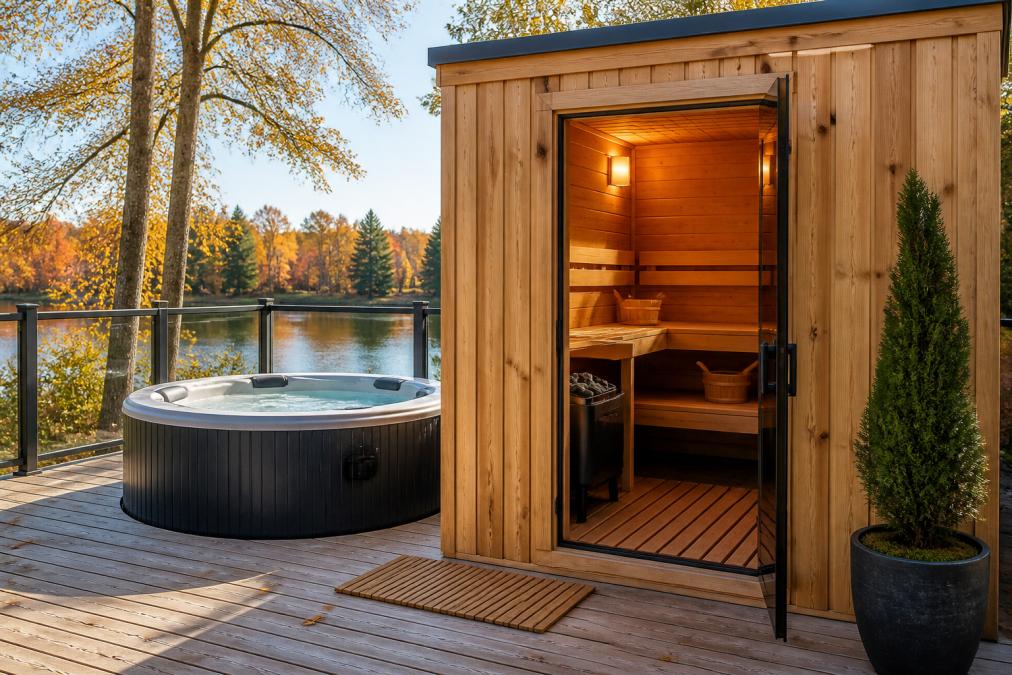
Outdoor saunas offer a more immersive experience and don't compete with interior square footage. Barrel saunas and cabin-style units are the most common outdoor formats. They require weatherproofing, a stable level foundation, and consideration of local building codes. The year-round accessibility question is real: a well-insulated outdoor sauna in a cold climate can reach operating temperature in 30 to 45 minutes even in winter, which makes it genuinely usable across all seasons.
The Lavish Sunset offers outdoor sauna options designed for year-round use, built with materials that hold up to temperature extremes without compromising the warmth and craftsmanship that make the experience worth returning to.
Electrical Requirements and Operating Costs
Most traditional steam saunas require a dedicated 240V, 20-40 amp circuit. This is not a standard household outlet, and installation typically requires a licensed electrician. Infrared saunas vary: smaller two-person units sometimes run on 120V standard circuits, while larger models require 240V.
Operating costs depend on heater wattage, session frequency, and local electricity rates. A typical 6kW traditional sauna heater running for one hour consumes roughly 6 kilowatt-hours of electricity. At the national average electricity rate, that translates to a modest per-session cost that adds up to far less annually than a gym membership with sauna access. Energy efficiency improves significantly with proper insulation: well-insulated walls and a tight door seal reduce heat-up time and hold temperature more efficiently.
Space planning minimums:
- Two-person sauna: approximately 4 feet x 4 feet of interior floor space
- Four-person sauna: approximately 5 feet x 7 feet
- Ceiling height: 7 feet is standard; lower ceilings reduce heat efficiency
- Clearance: allow at least 18 inches around the exterior for ventilation and maintenance access
According to the U.S. Department of Energy's guidance on home electrical upgrades, any new 240V circuit installation should be permitted and inspected to ensure compliance with the National Electrical Code.
Long-Term ROI: Convenience, Hygiene, and Home Value
Most sauna content stops at "it pays for itself" without ever showing the math. This section does the opposite. The goal is a realistic break-even framework so you can evaluate the investment against your actual usage pattern, not a marketing promise.
The Break-Even Calculation: What You Actually Need to Know
The core question is straightforward: at what point does owning a home sauna cost less than the alternative you would otherwise pay for?
The most common alternative is a gym or spa membership that includes sauna access. Premium gym memberships with dedicated sauna facilities run anywhere from roughly $80 to $200 per month depending on market and tier. A standalone spa day with sauna access typically runs $50 to $150 per visit. For this calculation, use the gym membership model since it reflects recurring, habitual use.
Sample break-even model (mid-range scenario):
| Variable | Assumption |
|---|---|
| Home sauna installed cost (mid-range infrared, 2-person) | Pricing depends on quantity, dates, and delivery |
| Monthly electricity cost (3-4 sessions/week at avg. U.S. rate) | $15-$30/month |
| Avoided gym/spa membership | $100-$150/month |
| Net monthly savings after electricity | $70-$135/month |
| Break-even point | 30-60 months (2.5-5 years) |
These figures use mid-range installed costs and a conservative avoided-membership assumption. A household with two regular users effectively doubles the avoided cost without doubling the electricity bill, compressing the break-even window significantly. A traditional steam sauna at the higher end of the installation range extends the break-even timeline, but the property value argument becomes more relevant at that investment level.
Energy Efficiency and Monthly Operating Costs
This is the number competitors consistently omit, and it's one of the most practical figures a buyer needs.
Operating cost depends on three variables: heater wattage, session duration, and your local electricity rate. The U.S. residential average electricity rate sits around $0.16 per kilowatt-hour as of recent Energy Information Administration data, though rates vary significantly by state, Hawaii and California run considerably higher, while parts of the South and Midwest run lower.
Estimated monthly operating costs by sauna type:
| Sauna Type | Typical Heater Draw | 1-Hour Session Cost (avg. rate) | Monthly Cost (12 sessions) |
|---|---|---|---|
| Traditional steam (6kW heater) | 6 kWh/hr | ~$0.96 | ~$11.50 |
| Traditional steam (9kW heater, larger unit) | 9 kWh/hr | ~$1.44 | ~$17.25 |
| Infrared (1,400W, 2-person) | 1.4 kWh/hr | ~$0.22 | ~$2.70 |
| Infrared (2,400W, 4-person) | 2.4 kWh/hr | ~$0.38 | ~$4.60 |
Infrared saunas are dramatically cheaper to operate because they heat the body directly rather than heating a large volume of air. For a household running three to four sessions per week, the annual electricity cost of a mid-size infrared unit is often under $50. A traditional steam sauna with a 6kW heater at the same frequency runs closer to $100-$150 annually, still modest relative to the avoided membership cost, but worth factoring into the comparison.
Insulation quality has an outsized effect on traditional steam operating costs. A well-insulated unit with a tight door seal reaches target temperature faster and holds it with less energy draw. Poor insulation is the most common reason owners report higher-than-expected electricity bills.
Property Value: What the Evidence Actually Supports
Home wellness amenities have moved from novelty to expectation in the premium residential market. Outdoor sauna installations, particularly those integrated into a cohesive backyard living space, are increasingly cited by real estate professionals as value-additive features in markets where outdoor living is a selling point.
The honest framing is that a sauna adds appraised value in proportion to how well it integrates with the property. A purpose-built outdoor cabin sauna on a finished deck with proper electrical and drainage reads as a permanent improvement. A prefab barrel sauna sitting on bare ground with an extension cord reads as personal property. The distinction matters at appraisal.
For buyers in cold-weather markets, year-round usability is the key qualifier. An outdoor sauna that requires 45 minutes to heat in January and is genuinely used through winter adds more demonstrable value than one that sits dormant for five months.
Hygiene as a Compounding Value Driver
Public and gym saunas are shared environments cleaned on facility schedules. A private sauna is cleaned on your schedule, used only by people you choose, and never presents the uncertainty of a shared bench. For wellness-focused households, that exclusivity has genuine value that doesn't appear in any break-even spreadsheet but influences daily use frequency, and frequency is what drives every other ROI metric in this section.
| Investment Factor | Short-Term (Year 1) | Long-Term (Year 5+) |
|---|---|---|
| Health benefits | Stress reduction, better sleep | Cardiovascular health, chronic pain relief |
| Convenience | Eliminates gym/spa trips | Year-round accessibility |
| Hygiene | Private, controlled environment | Consistent cleanliness |
| Property value | Aesthetic upgrade | Appraised value addition |
| Operating cost | Electricity per session | Decreasing relative to avoided costs |
| Break-even trajectory | Investment phase | Net-positive territory |
Frequently Asked Questions
What are the primary health benefits of owning a private home sauna?
Regular use of home saunas supports cardiovascular health by promoting vasodilation and improving blood circulation. Heat exposure triggers endorphin release, which lowers cortisol levels and reduces stress. Sessions also aid muscle recovery by increasing blood flow to sore tissue, improve sleep quality through post-heat body temperature drops, and promote detoxification through sweating. Both infrared sauna and traditional steam options deliver these benefits, though the mechanisms and intensity of heat exposure differ between types.
What is the recommended duration for a sauna session to maximize benefits?
Most wellness guidelines suggest 15 to 20 minutes per session for beginners, with experienced users extending to 30 minutes. Exceeding 30 minutes in a single session raises the risk of dehydration and overheating. Splitting time into two shorter rounds with a 5-to-10-minute cool-down between them is a common approach for post-workout recovery. Always hydrate before and after. People with cardiovascular conditions or other health concerns should consult a physician before starting regular sauna use.
Are there significant downsides to installing a home sauna?
The main considerations are upfront cost, space requirements, and electrical infrastructure. Outdoor and indoor saunas typically require a dedicated 240-volt circuit, and installation may need a licensed electrician and local permits. Ongoing maintenance, cleaning benches, checking humidity levels, and inspecting heating elements, adds a small time commitment. People with certain health conditions, including low blood pressure or pregnancy, should get medical clearance before regular use. Proper ventilation is also essential to prevent moisture damage in indoor installations.
How does a private home sauna differ from a public gym sauna in terms of hygiene and convenience?
A private home sauna gives you full control over cleanliness, temperature, humidity levels, and session timing. Public gym saunas are shared spaces where hygiene depends on facility management and other users. At home, you set the sauna rocks or infrared panels to your preferred heat, enter without waiting, and recover on your own schedule. For busy professionals, eliminating the commute to a gym and the unpredictability of shared spaces makes year-round accessibility far more consistent.