Premium Outdoor Fire Pits: A 2026 Buyer's Guide
Table of Contents
- Premium Outdoor Fire Pits: What Sets Them Apart
- Best Materials for Outdoor Fire Pits
- Wood-Burning vs. Gas Fire Pits: Choosing Your Fuel Source
- Luxury Gas Fire Pit Tables and Modern Designs
- Outdoor Fire Pit Safety Standards and Clearance Requirements
- Top Premium Fire Pit Options for Your Backyard
- Installation, Maintenance, and Long-Term Ownership
- Frequently Asked Questions
Last Updated: September 1, 2026
Premium Outdoor Fire Pits: What Sets Them Apart
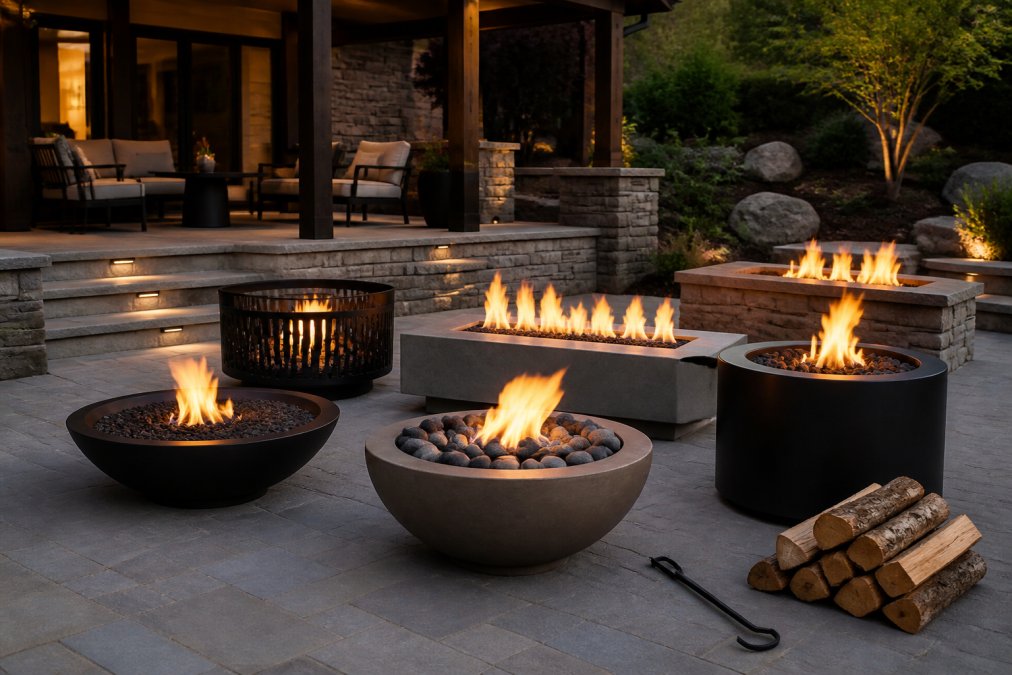
A premium outdoor fire pit transforms a backyard into a destination. These engineered pieces deliver superior heat output, weather-resistant construction, and design that complements high-end outdoor living spaces. Materials like corten steel develop a protective patina, stainless steel resists corrosion indefinitely, and handcrafted construction ensures exacting standards. At The Lavish Sunset, we curate fire pits that function as both heat sources and sculptural elements.
Modern premium fire pits now include smokeless technology that reduces irritation and ash cleanup, advanced gas ignition systems with remote control capability, and multi-functional designs combining fire features with cooking surfaces.
| Feature | Budget Fire Pit | Premium Fire Pit |
|---|---|---|
| Material | Painted steel | Corten steel, stainless steel, or handcrafted metal |
| Durability | 3-5 years | 15-25+ years |
| Design | Generic | Curated, often handcrafted |
| Heat Output | Variable | Engineered BTU rating |
| Fuel Options | Wood only | Wood, propane, natural gas |
| Accessories | Limited | Extensive (covers, cooking grates, glass) |
Best Materials for Outdoor Fire Pits
The material you choose determines durability, maintenance requirements, and longevity.
Corten Steel develops a distinctive rust-like patina that protects underlying metal from further corrosion. This weathering steel is favored by contemporary designers because the finish evolves naturally over time. Corten requires no paint or protective coating, though some owners apply clear sealant to slow patina development.
Stainless Steel offers a cleaner aesthetic and requires virtually no maintenance. It resists corrosion indefinitely and maintains appearance year-round. Solo Stove's Yukon uses 304 stainless steel and delivers reliable performance without weathering patina, though stainless models command a premium price.
Mild Carbon Steel with powder-coat finishes appears in handcrafted models like Fire Pit Art's Asia design. The iron oxide patina that develops is rich and deep, aging gracefully in outdoor conditions. These models are durable and affordable relative to their craftsmanship level.
Concrete and Copper bowls appear in modular gas systems like HPC Fire's offerings. Concrete provides contemporary, minimalist aesthetics and excellent heat retention. Copper develops a green patina and offers distinctive visual appeal.
Wood-Burning vs. Gas Fire Pits: Choosing Your Fuel Source
Wood-Burning Fire Pits deliver authentic flame, wood aroma, and the ritual of tending a fire. They require no gas line installation and work during power outages. Smokeless technology changes this equation. Designs like the Breeo X Series 30 and Solo Stove Yukon use dual-chamber construction and airflow engineering to dramatically reduce smoke, burning wood more efficiently with less ash and hotter flames. Smokeless models run $1,400 and up versus $300-600 for conventional pits.
Gas Fire Pits offer convenience, cleanliness, and precise flame control. Turn a key or press a button for fire within seconds. No ash, no smoke, no wood storage. Gas pits integrate with existing propane tanks or natural gas lines, and many include remote ignition or app-based controls. HPC Fire's systems exemplify this, with some models featuring Bluetooth connectivity and automatic flame sensing.
Gas installation may require a licensed technician if running a natural gas line. Propane is portable but requires tank refills. Operating costs depend on usage; a gas pit running 20 hours weekly consumes roughly one 20-pound propane tank per month.
For entertaining, gas wins on convenience. For the sensory experience of fire, wood-burning wins, especially smokeless models.
Luxury Gas Fire Pit Tables and Modern Designs
Gas fire pit tables blur the line between furniture and fire feature, integrating into outdoor seating arrangements while providing warmth and ambiance. These tables typically feature a burner system beneath a decorative top with fire glass, lava rock, or ceramic logs visible through tempered glass. HPC Fire's Inspiration Series exemplifies this approach, offering customizable bowl designs in concrete, copper, and aluminum finishes. Models range from $2,159 for entry-level systems to $15,847 for elaborate H2Onfire designs that create flame effects on water surfaces.
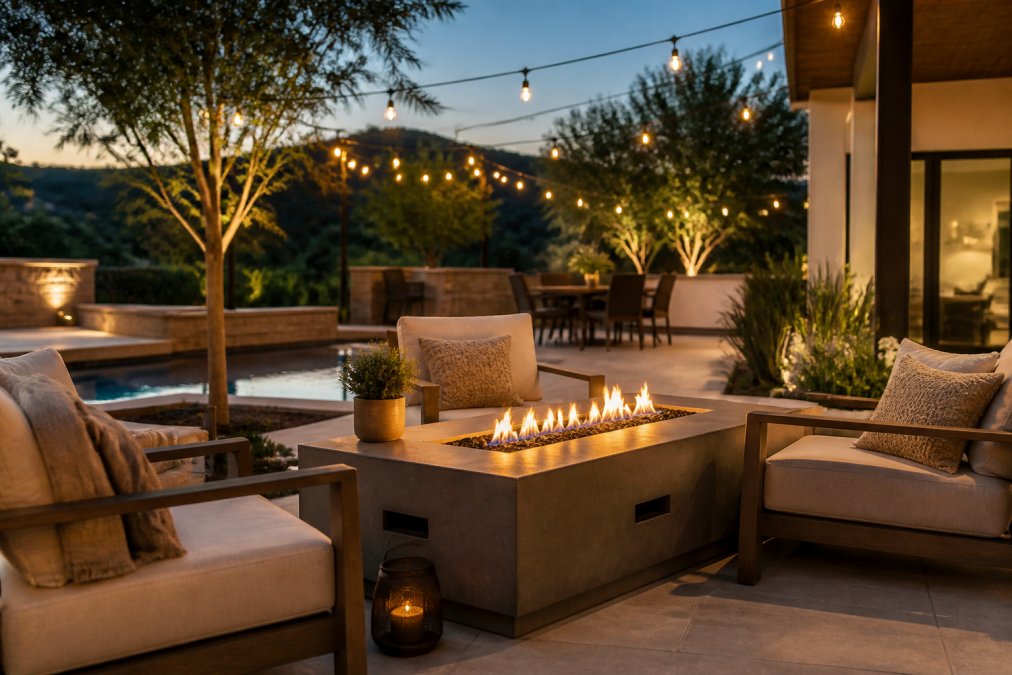
The advantage of gas tables is integration into designed outdoor rooms, providing 20,000-40,000 BTU of heat without the footprint of a standalone pit. Ignition systems vary: piezo (push-button) ignition is reliable and requires no electricity; electronic ignition offers app control and remote operation but depends on a power source.
Installation requires gas lines run by licensed professionals. Propane tables require a tank positioned nearby, ideally concealed.
Outdoor Fire Pit Safety Standards and Clearance Requirements
Safety is non-negotiable. Improper placement causes property damage and injury.
Most jurisdictions enforce clearance requirements based on fire codes. The general standard: maintain at least 10 feet of clearance from structures, overhanging branches, and combustible materials (nfpa.org). Some municipalities require 15 feet. Check with your local fire marshal before installation.
Clearance applies vertically as well. Overhanging tree branches should be trimmed back at least 12-15 feet above the fire feature (the CDC). Propane tanks must be positioned at least 10 feet from the pit itself and stored in a well-ventilated area.
For ground-level installation, use a non-flammable base. Concrete pads, gravel, or fire-rated pavers work. Never place a wood-burning pit directly on grass, soil, or wood decking.
Spark screens and protective covers reduce risk. Spark screens contain embers; covers protect the pit when not in use and reduce weather exposure.
According to National Fire Protection Association safety guidance, unattended fires and improper clearance are leading causes of outdoor fire incidents. Establish a rule: never leave a fire unattended, ensure someone is present while the fire burns, and extinguish completely before leaving the area.
Top Premium Fire Pit Options for Your Backyard
Smokeless Wood-Burning Excellence
The Solo Stove Yukon ($459.99) and Breeo X Series 30 ($1,399.00) represent the gold standard in smokeless wood-burning technology.
Solo Stove's Yukon uses a 360-degree airflow system that pulls oxygen from below and pushes hot air down through burning wood, dramatically reducing smoke. The 27-inch diameter accommodates larger fires, and the durable 304 stainless steel construction ensures decades of use. The removable ash pan collects fine ash for easy cleaning.
Breeo's X Series 30 uses Corten steel construction with optional compatibility with their Outpost grilling system. Handcrafted in Pennsylvania by Amish builders, each unit includes a numbered brass plate. The 34.5-inch diameter accommodates larger gatherings. Corten steel develops a rich patina requiring no maintenance.
Solo Stove prioritizes portability and ease of setup; Breeo emphasizes craftsmanship and cooking versatility.
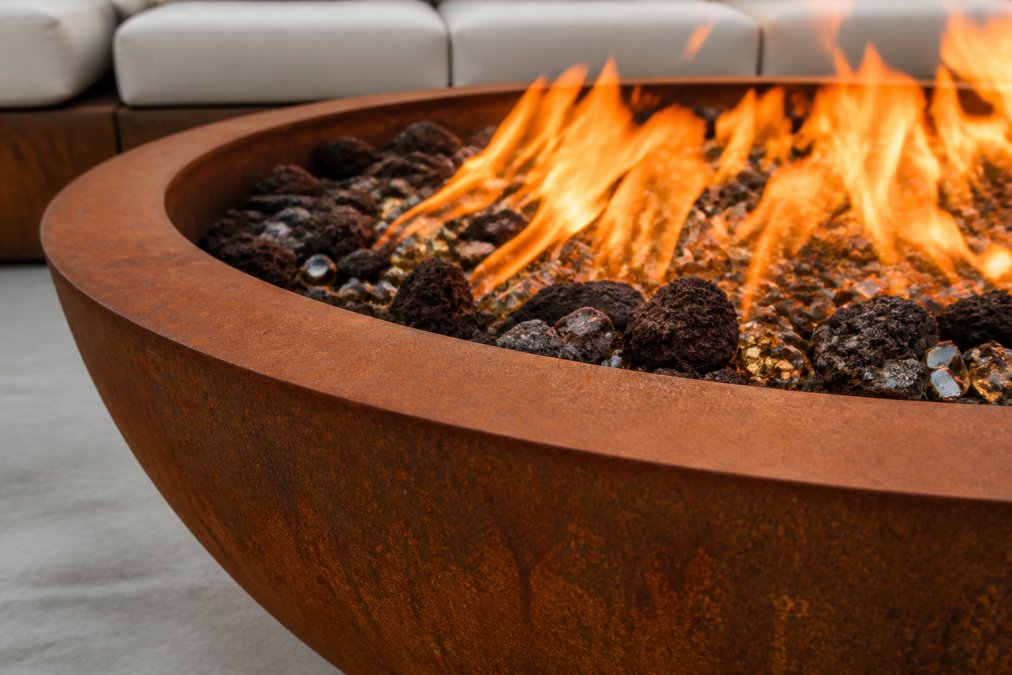
Corten Steel and Contemporary Design
Paloform's Bol Corten Fire Bowl and Modfire's Astrofire represent contemporary design philosophies in fire pit construction.
The Paloform Bol ($1,500+ estimated, contact for pricing) is minimalist, a low-profile bowl with refined edges, available in wood-burning, natural gas, or propane versions. Corten steel develops a distinctive patina becoming part of the design. The safety thermocouple ignition system is reliable; electronic ignition adds convenience.
Modfire's Astrofire ($2,400.99 for wood-burning models) channels 1960s retro-futurism. The conical shape and sweeping legs make it a statement piece. Available in bold colors with powder-coat finishes, the Astrofire functions as both fire feature and art installation.
Both excel in design-forward spaces. The Bol suits minimalist aesthetics; the Astrofire suits mid-century modern interiors.
Multi-Functional Cooking Fire Features
The OFYR Classic 100 ($2,145.00 for black coated steel, $1,995.00 for Corten) and Fire Pit Art's Asia ($1,320.00 for 36-inch wood-burning) blur the line between fire pit and outdoor kitchen.
OFYR's design is iconic: a cone-shaped fire bowl with a wide, flat rim functioning as a plancha for cooking. Multiple temperature zones allow simultaneous frying, grilling, and slow cooking. Corten models require less maintenance; black coated versions need occasional touch-ups.
Fire Pit Art's Asia features a low-profile, wok-inspired design with handcrafted construction from 1/4-inch mild carbon steel. Available in wood-burning, natural gas, or propane, the Asia accepts lava rock or fire glass. The iron oxide patina that develops is rich and deep.
Both excel for entertaining and cooking. OFYR suits European-influenced outdoor kitchens; Asia suits contemporary or eclectic spaces.
Advanced Gas Technology
HPC Fire's Inspiration Series ($2,159-$15,847 depending on configuration) and Tempest Torch by Travis Industries ($1,150.00) represent the technological frontier of gas fire features.
HPC Fire offers complete customization: choose your bowl material (concrete, copper, aluminum), ignition system (piezo or electronic), and fuel source (propane or natural gas). Bluetooth connectivity and remote ignition are available on premium models. Flame sensing technology automatically shuts off gas if the flame extinguishes.
Tempest Torch is a specialized product, an outdoor gas torch with a patented venturi design creating a spiraling 20,000 BTU flame. It's not a fire pit but a dramatic lighting feature, available with wall, post, or pillar mounting.
HPC Fire suits buyers wanting customization and advanced controls. Tempest Torch suits those seeking an artistic outdoor lighting element.
Installation, Maintenance, and Long-Term Ownership
Installation complexity varies dramatically by model and fuel source.
Wood-burning pits are straightforward: place on a non-flammable base, verify clearances, and light a fire. No permits, inspections, or professional help required. Maintenance is minimal, with occasional ash pan cleaning.
Propane fire pits require a tank positioned nearby. Most models include a regulator and hose; connection is DIY-friendly. Propane tanks are refilled at hardware stores; a 20-pound tank typically lasts 20-40 hours depending on BTU output.
Natural gas fire pits require a licensed professional to run a gas line from your home's main line to the pit location. This permanent installation has associated costs. Budget accordingly: gas line installation can run $500-2,000 depending on distance and complexity.
Maintenance varies by material:
- Stainless steel: Minimal. Rinse occasionally, wipe dry. Lasts indefinitely.
- Corten steel: Allow patina to develop naturally. No protective coating needed.
- Powder-coated steel: Occasional touch-ups if scratches occur. Covers extend life.
- Concrete: Seal annually to prevent water penetration and staining.
Long-term ownership costs include propane refills (if applicable), occasional repairs, and protective covers. A quality cover ($50-150) extends pit life significantly by reducing UV exposure and weather damage. Expect a premium fire pit to require minimal intervention over 15-25 years of use.
Selecting a premium outdoor fire pit requires balancing material durability, design aesthetic, fuel convenience, and intended use. Smokeless wood-burning models deliver authenticity and ambiance; gas tables integrate seamlessly into outdoor living spaces; contemporary designs serve as sculptural centerpieces. At The Lavish Sunset, we curate fire pits combining superior craftsmanship with timeless design, ensuring your investment enhances your backyard for decades. Browse our carefully selected collection and find the piece that transforms your outdoor space into a refined retreat where meaningful moments unfold under open skies. Add to cart and begin creating your sanctuary today.
Frequently Asked Questions
Q: What materials are best for a premium outdoor fire pit?
A: Corten steel, stainless steel, and handcrafted carbon steel are top choices for premium fire pits. Corten steel develops a distinctive rust patina that protects the underlying metal and requires minimal maintenance. Stainless steel resists corrosion and maintains a polished appearance year-round. Handcrafted carbon steel ages gracefully. The best material depends on your climate, aesthetic preferences, and maintenance tolerance.
Q: Is a gas or wood-burning fire pit better for a luxury outdoor space?
A: Both offer distinct advantages for premium outdoor living. Wood-burning fire pits deliver authentic ambiance, and smokeless technology reduces smoke for a more refined experience. Gas fire pits provide convenience, precise heat control, and cleaner operation without ash cleanup. Gas models can integrate with modern hardscaping and may offer remote ignition and Bluetooth connectivity on high-end units. Your choice depends on whether you prioritize a traditional fire experience or modern convenience and technology.
Q: What outdoor fire pit safety standards should I follow?
A: Premium fire pits should maintain clearance of at least 10-15 feet from structures, trees, and flammable materials. Gas models may require professional installation by licensed technicians to ensure proper gas line connections and thermocouple safety shut-off systems. Wood-burning fire pits need a spark screen or protective cover to prevent embers from escaping. Check local fire codes and HOA regulations before installation. Many premium models include automatic ignition systems and flame-sensing technology to prevent gas leaks and ensure safe operation.
Q: How much does a premium outdoor fire pit cost?
A: Premium fire pit pricing varies significantly based on materials, fuel type, and features. The investment reflects craftsmanship, durability, and long-term value. For current pricing on specific models and customization options, visit The Lavish Sunset's website or request a quote for your exact backyard specifications and design preferences.
Q: Can I use a premium fire pit during winter months?
A: Yes, premium fire pits are designed for year-round use with proper maintenance. Corten steel and stainless steel models withstand freezing temperatures and snow. Gas fire pits can function reliably in cold weather when installed with weather-resistant covers and proper gas line protection. Wood-burning models require protective covers to prevent moisture accumulation. Many homeowners use premium fire pits as winter gathering spaces, paired with outdoor heaters or saunas to extend the usable season in colder climates.