Outdoor Saunas in Freezing Temperatures: Winter Guide
Table of Contents
- Why Outdoor Saunas Work in Freezing Temperatures
- Sauna Heating Time in Cold Weather: What to Expect
- Barrel Sauna vs. Cabin Sauna Performance in Winter
- Winter Sauna Maintenance Tips for Harsh Climates
- Sauna Session Duration in Winter: Finding Your Comfort Zone
- The Benefits of Contrast Therapy: Sauna and Cold Plunge
- Choosing the Right Outdoor Sauna for Your Winter Retreat
- Frequently Asked Questions
Last Updated: September 15, 2026
Why Outdoor Saunas Work in Freezing Temperatures
Using outdoor saunas in freezing temperatures works because the same physics that keeps a thermos warm also keeps a sauna hot: a sealed, insulated envelope traps heat faster than winter air can steal it. The cold outside is not the enemy. Poor heat retention is.

How Insulation and Heat Retention Keep the Cold Out
Thermal insulation slows heat transfer between the hot interior and the freezing air outside. In a well-built outdoor sauna, it slows conduction through the walls, blocks drafts, and reduces radiant heat loss through glass.

The practical levers are straightforward:
- R-value: the higher the rating, the slower heat escapes. Walls typically outperform single-pane glass by a wide margin.
- Vapor barrier: placed on the warm side, it stops moist air from migrating into the wall cavity and condensing inside the structure.
- Thermal bridging: wood studs conduct heat around insulation, so continuous insulation or a thermal break matters in harsh winters.
- Ventilation: a controlled inlet and outlet keep air fresh without dumping heat.
Sauna Heating Time in Cold Weather: What to Expect
Sauna heating time in cold weather is longer than in summer because the heater must warm the room and the cold surfaces around it. Expect a pre-heat window of roughly 30 to 60 minutes in mild winter conditions, and longer when the temperature drops well below freezing and the structure has sat cold for days.
Electric Stoves vs. Wood-Burning Heaters in Sub-Zero Conditions
An electric stove (often called a kiuas) is the simpler choice for winter: set the temperature, walk away, and let it work. Electric heaters hold a steady temperature and pair well with smart home integration for pre-heating, so the room is ready when you are.
A wood-burning heater delivers a deep, radiant heat that many bathers prefer, and it keeps working when the power is out. The trade-off is attention. Someone has to load and tend the fire, and the warm-up is less predictable in a hard freeze.
| Heater Type | Warm-Up in Cold Weather | Best For | Winter Consideration |
|---|---|---|---|
| Electric stove | Steady, predictable | Set-and-forget sessions | Needs a dedicated circuit |
| Wood-burning heater | Longer, variable | Deep radiant heat, off-grid | Requires tending and dry wood |
| Infrared panels | Fast surface warmth | Quick, lower-temp sessions | Less intense steam |
Barrel Sauna vs. Cabin Sauna Performance in Winter
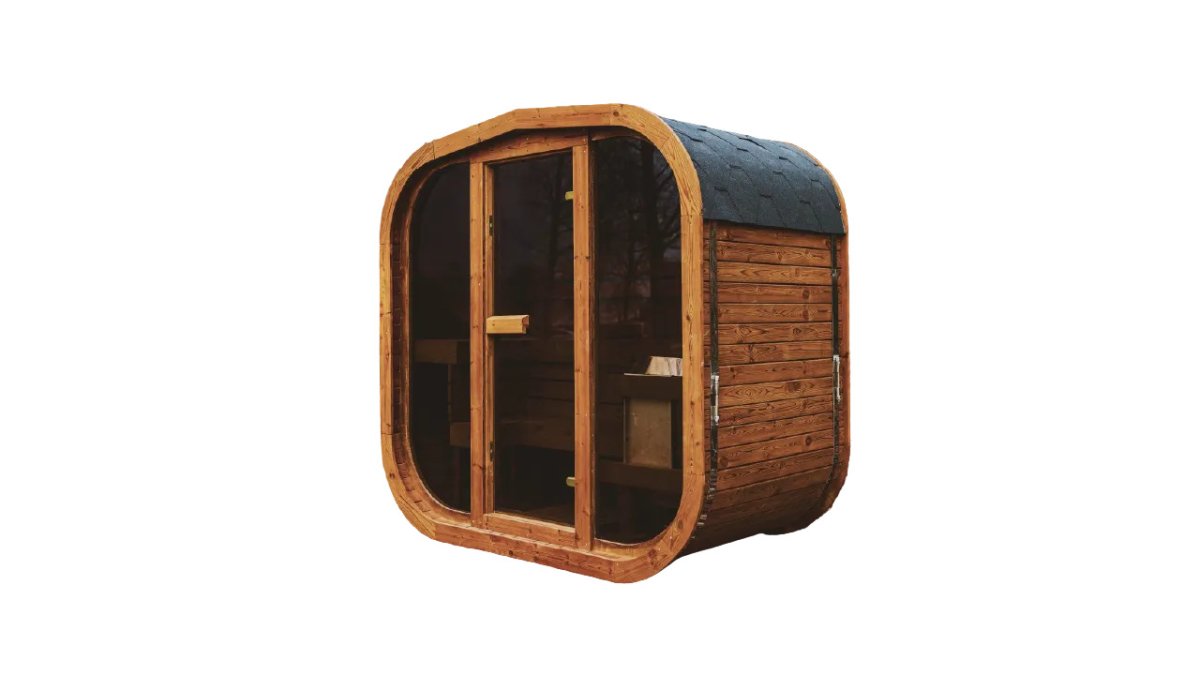
A cabin sauna generally holds heat more evenly in winter because its flat walls and corners can create a tighter, better-insulated envelope. A barrel sauna heats quickly thanks to its compact curved volume, but the shape may leave less room for thick insulation and the end walls can lose heat faster. What many guides skip is how each shape behaves once the freeze-thaw cycle starts working on the wood.
How Shape Affects Heat Retention
The physics come down to surface area and air movement. A barrel's curved interior can keep warm air circulating in a gentle loop, which may contribute to it feeling ready sooner. A cabin's flat walls and square corners can hold a steadier temperature because there may be less radiant loss and more room for continuous insulation. In a hard freeze, a cabin might stay closer to your target temperature between rounds, while a barrel might recover more slowly once the door has been open.
Neither design is wrong. The right pick depends on how you plan to use the space and how cold your winters get.
- Choose a cabin if you want the best heat retention, room for benches and company, and easier insulation upgrades.
- Choose a barrel if you value a faster warm-up, a distinctive look, and a smaller footprint.
- Either way, look for ThermoWood or cedar, both of which resist moisture and the freeze-thaw cycle better than untreated softwoods.
Material Degradation: Cedar vs. ThermoWood Through Freeze-Thaw Cycles
Cedar is naturally rot-resistant and dimensionally stable, but it is still a softwood. Over repeated winters, the freeze-thaw cycle pushes moisture in and out of the grain, and cedar can show it first as surface checking: fine hairline cracks along the face of the boards. Left alone, those checks may deepen where water collects.
ThermoWood is kiln-treated at high heat, which drives out resins and sugars and changes the cell structure of the wood. The result is a material that absorbs less moisture to begin with, so there is less water inside the board to expand when it freezes. In practice, ThermoWood siding and benches can hold their shape and color longer through repeated winters than untreated softwood does.
A few patterns worth knowing:
- Cedar ages gracefully and smells wonderful, but benefits from a periodic oil or sealant on exterior faces.
- ThermoWood resists moisture uptake and warping more consistently, which matters most at the door frame, the lower wall, and the roof edge.
- Both last far longer when the sauna dries fully between sessions and snow is cleared promptly.
Snow Load and Roof Design
Roof geometry can be as important as wall material. A barrel sauna's curved roof may shed snow naturally, which can be an advantage in heavy-snow regions. A cabin's flatter roof needs to be rated for the local snow load and cleared after major storms rather than left to melt on its own. Wet, heavy snow can be more stressful than dry powder.
Winter Sauna Maintenance Tips for Harsh Climates
Winter sauna maintenance tips for harsh climates come down to three habits: keep moisture out, keep air moving, and keep snow from piling up. A sauna that dries fully between sessions will outlast one that stays damp.
Managing Snow Load, Moisture, and Ventilation
- Clear snow from the roof and around the door after heavy storms.
- Open vents and the door after each session so the interior dries.
- Inspect the vapor barrier and seals each fall before the cold sets in.
- Check the heater and any exposed wiring for wear.
- Sweep the floor and benches dry rather than leaving standing water.
Moisture control and ventilation separate a sauna that lasts decades from one that warps in a few seasons. Material degradation shows up first at the door frame and the lower wall, where snow and splash collect.
Sauna Session Duration in Winter: Finding Your Comfort Zone
Sauna session duration in winter often runs a little shorter than in summer, because the contrast between the hot room and the cold air outside is more intense. A common approach is 10 to 15 minutes per round, followed by a cool-down, then a second round if you feel good.
Listen to your body rather than the clock. Step out if you feel lightheaded, and drink water before and after. Anyone with a heart condition, low blood pressure, or a pregnancy should check with a qualified healthcare professional before regular sauna use (mayoclinic.org).
The Benefits of Contrast Therapy: Sauna and Cold Plunge
The benefits of contrast therapy come from the swing between heat and cold, a rhythm that many bathers find deeply restorative.
Why Cold Air After Heat Is Different From a Cold Plunge
A Safer Winter Contrast Ritual
What Contrast Therapy Is Not
Choosing the Right Outdoor Sauna for Your Winter Retreat
Frequently Asked Questions
Can I use an outdoor sauna in freezing temperatures?
Yes. Outdoor saunas are built to handle cold climates, and many homeowners use them year-round. The key is proper insulation, a heater sized for your local ambient temperature, and a structure that manages moisture and snow. ThermoWood and cedar resist warping through freeze-thaw cycles, and a well-sealed cabin holds heat even when it is well below freezing outside.
How does extreme cold affect the heating time of an outdoor sauna?
Cold air pulls heat from the cabin faster, so expect a longer warm-up. In mild weather a sauna may reach temperature in 20 to 30 minutes; in freezing conditions, plan on 40 to 60 minutes or more. Pre-heating with a smart controller or a quick manual start earlier in the day can shorten the wait.
Is it safe to transition between a hot sauna and freezing outdoor air?
Many people enjoy the contrast, but the shift can be a stress on the body. Step out gradually, keep a robe and warm footwear by the door, and limit the cold exposure to a short interval. If you have heart conditions, circulation issues, or other medical concerns, talk with a qualified healthcare professional before trying contrast therapy.
Do I need to keep my outdoor sauna heated when not in use during winter?
No. You do not need to keep it heated between sessions. Instead, focus on moisture control: ventilate after each use, keep the interior dry, and check the door seal and roof for snow or ice buildup. A dry, well-ventilated cabin can handle freezing temperatures better than one that stays damp.